
Currently Empty: $0.00
If you’ve ever opened a bag of coffee, received a pouch of beef jerky, or stocked up on emergency food supplies, chances are you’ve already held a mylar bag in your hands you just didn’t know what to call it.
Mylar bags have quietly become one of the most trusted packaging solutions across the United States, from home preppers in rural Montana to cannabis brands in Colorado and coffee roasters in Portland. And for good reason. These bags do something regular plastic packaging simply can’t: they create a near-impenetrable barrier between your product and the outside world.
But here’s the problem most people buying mylar bags for the first time have no idea what thickness they need, which seal type is right for their product, or even what the different size options mean. That confusion often leads to the wrong purchase, wasted money, and products that don’t stay fresh as long as they should.
What Exactly Is a Mylar Bag?
The word “Mylar” gets thrown around a lot in the packaging world, but it’s worth understanding what it actually means.
“Mylar” is technically a brand name it refers to a type of polyester film called BoPET, which stands for biaxially-oriented polyethylene terephthalate. This film was originally developed in the 1950s by DuPont and ICI (Imperial Chemical Industries) and was valued for its exceptional tensile strength and gas-barrier properties. NASA even used it in the Echo II satellite balloon.
Over time, the term “Mylar” became the everyday shorthand for this family of flexible, metallized packaging films. Today, when someone says “mylar bag,” they’re typically referring to a multi-layer flexible pouch that includes:
- An outer layer of polyester (PET) film: this is what gives the bag its printability and tear resistance
- A middle layer of aluminum foil or metallized film: this is the star of the show, blocking out light, oxygen, and moisture
- An inner layer of polyethylene (PE): this food-safe layer is what gets heat-sealed together to close the bag
That three-layer sandwich is what makes Mylar bags so effective. Each layer does a specific job, and together they create a packaging solution that keeps products fresh far longer than standard plastic alternatives.
Why Mylar Bags Work So Well: The Science in Plain English?
You don’t need a chemistry degree to understand why Mylar bags outperform regular plastic bags, but it helps to know the basics.
Three things cause most food and products to degrade over time: oxygen, moisture and light. Mylar bags are engineered to block all three.
- Oxygen speeds up oxidation the same process that makes a cut apple turn brown or butter go rancid. The metallized aluminum layer in a Mylar bag has an extremely low oxygen transmission rate (OTR), meaning very little oxygen can pass through the material over time.
- Moisture is the enemy of anything dry. Even small amounts of water vapor can cause clumping, mold growth, and nutrient breakdown. Mylar bags have a very low water vapor transmission rate (WVTR), which keeps dry goods dry even in humid climates.
- Light especially UV light degrades flavor, color, and nutritional value in many food products. The opaque aluminum layer in most Mylar bags blocks light completely.
This combination is why properly sealed Mylar bags can preserve dry foods for 10 to 30 years in the right conditions. That’s not marketing hype its materials science.
What Are Mylar Bags Used For?
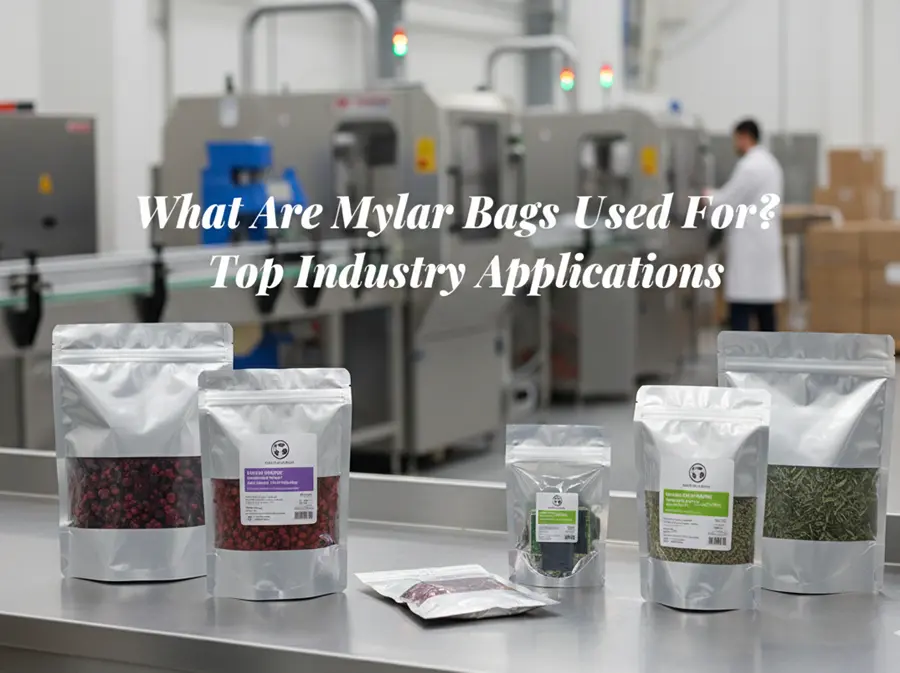
The protective properties of Mylar bags make them useful across a surprisingly wide range of industries. Here’s a look at where they show up most.
Food Storage and Preservation
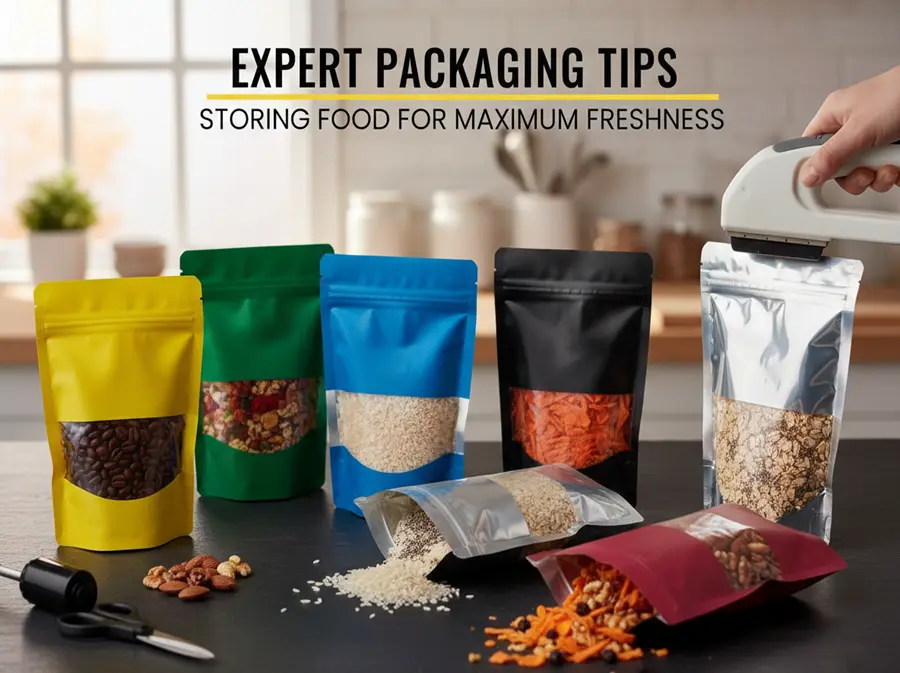
This is by far the most common use. Mylar bags are the gold standard for storing long-shelf-life dry goods because they keep moisture and oxygen out better than almost any other flexible packaging option.
Common food products stored in Mylar bags include:
- Rice, beans and lentils
- Pasta and flour
- Dried fruits and vegetables
- Coffee beans and ground coffee
- Herbs, spices and seasonings
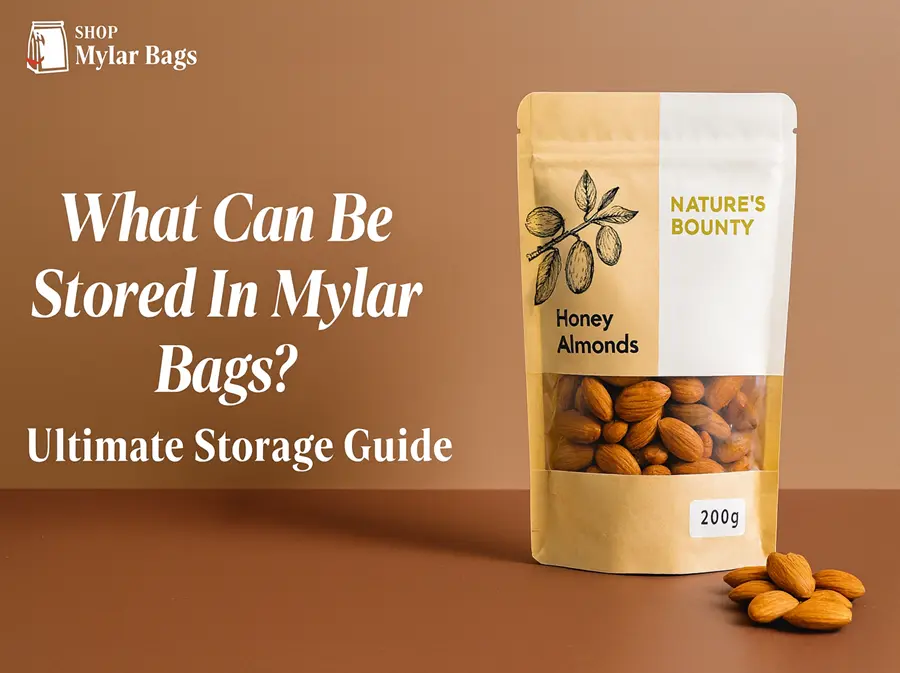
- Nuts and trail mix
- Pet food and treats
- Freeze-dried meals and emergency food supplies
- Protein powders and health supplements
For home preppers and emergency food storage, Mylar bags paired with oxygen absorbers are the go-to solution for building a long-term food supply.
Cannabis and Hemp Products
The cannabis industry has embraced Mylar bags in a big way, and for good reason. Cannabis products are highly sensitive to light, air, and moisture exactly the conditions Mylar bags are designed to block. Child-resistant Mylar bags with resealable zippers are now widely used by dispensaries and cannabis brands across legal states.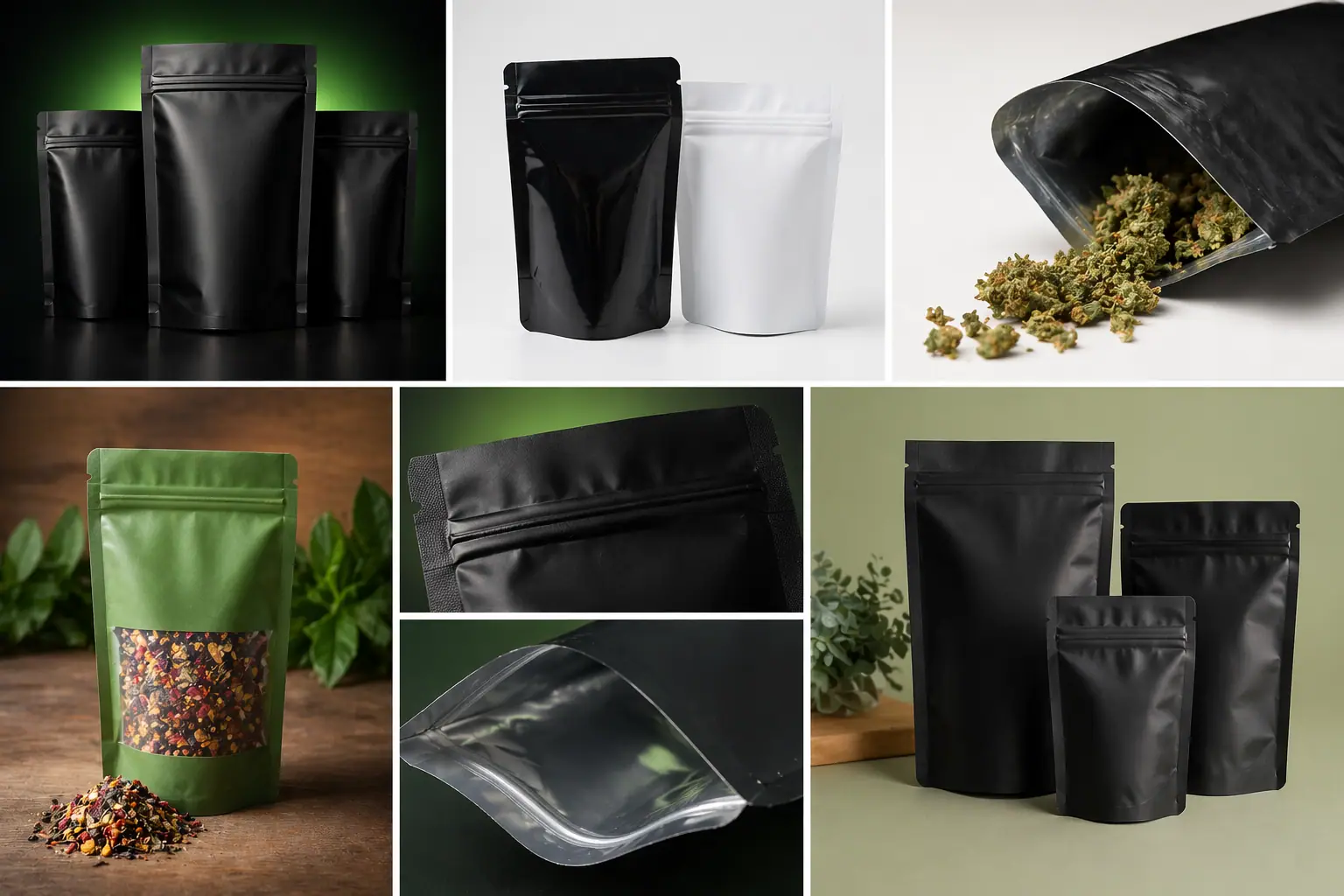
Pharmaceuticals and Supplements
Medicines, vitamins, and dietary supplements need protection from humidity and contamination to maintain potency. Mylar pouches offer the kind of pharmaceutical-grade barrier protection that keeps these products effective through their full shelf life.
Coffee Packaging
Specialty coffee roasters have long used stand-up Mylar pouches with one-way degassing valves. Freshly roasted coffee releases CO2 for days after roasting, and a degassing valve lets that gas escape without letting oxygen in keeping the coffee fresh without bloating the bag.
Cosmetics and Beauty Products
Powdered cosmetics, face masks, bath salts, and similar products benefit from Mylar packaging because it protects against contamination and keeps the products free from moisture clumping.
Documents and Collectibles
Important papers, comic books, trading cards, and historical documents can be stored in Mylar bags for long-term archival protection. The material is inert and won’t cause yellowing or chemical degradation the way some plastics do.
Electronics
Anti-static Mylar bags (typically with a slightly different material composition) are used to ship and store circuit boards, memory cards, and other sensitive electronics that could be damaged by electrostatic discharge.
Mylar Bag Types: Which Style Is Right for You?
Not all Mylar bags are created equal. The style you choose depends on your product, how customers will use it, and whether you need reseal ability.
Flat Seal Bags (Heat-Seal Only)
These are the simplest Mylar bags no zipper, no bottom gusset, just a flat pouch that you fill and heat seal. They’re extremely cost-effective and offer excellent barrier protection. The downside is that once sealed, the only way to open them is to cut them open so they’re best for products that will be used all at once or for long-term storage where the bag won’t be reopened frequently.
Best for: Emergency food storage, bulk dry goods, archival storage.
Stand-Up Pouches with Zipper (SUP)
These bags have a gusseted bottom that lets them stand upright on a shelf, plus a resealable zipper at the top. They’re incredibly popular for retail products because they’re attractive, practical, and easy for customers to reseal. When you see a bag of coffee or a pouch of jerky standing up on a shelf, it’s almost always a stand-up pouch.
Best for: Coffee, pet treats, snacks, supplements, cannabis.
Resealable Flat Bags with Ziplock
Similar to a flat bag but with a resealable zipper closure at the top. These offer more flexibility than heat-seal-only bags for products that get opened and closed multiple times.
Best for: Herbs, spices, cosmetics, small food portions.
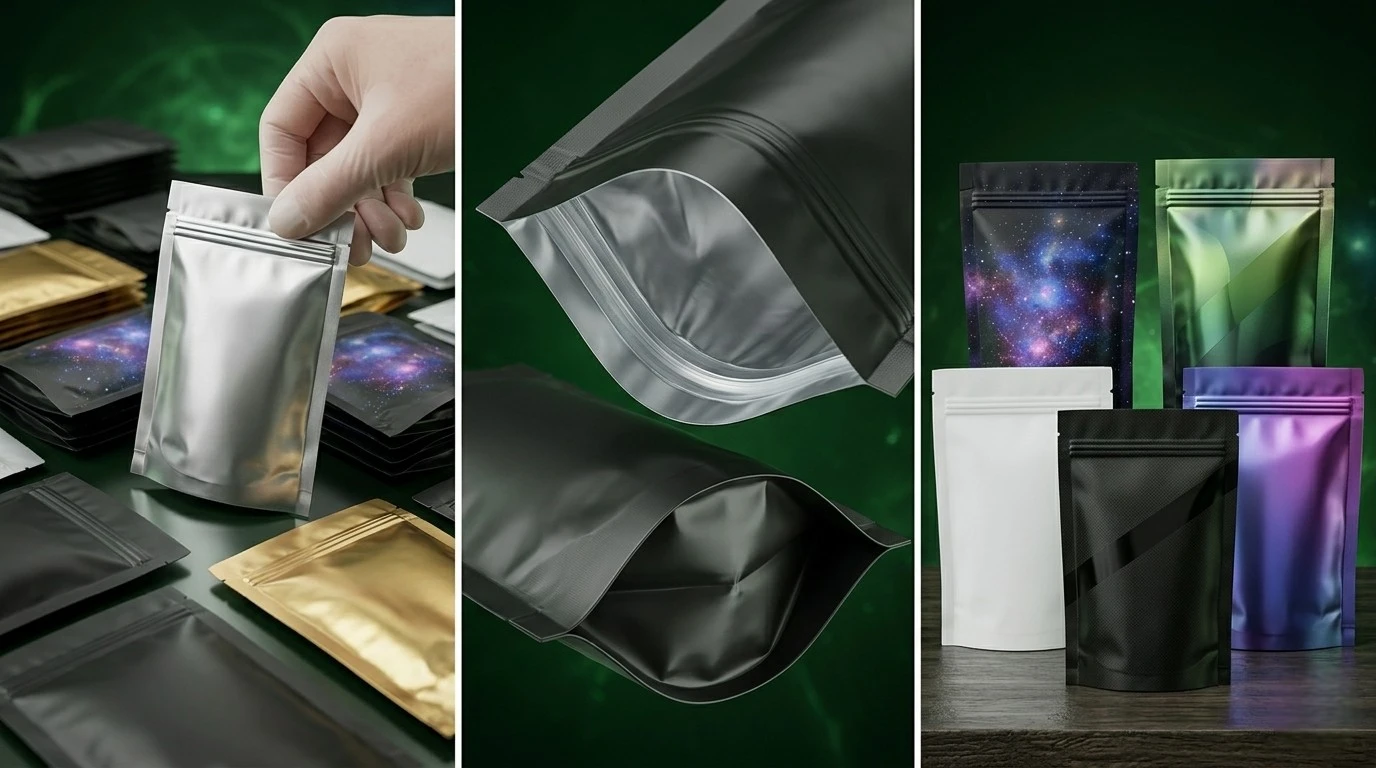
Child-Resistant Bags
These require a specific squeeze-and-pull motion to open and are designed to meet child-resistant packaging requirements. They’re essential for cannabis, some pharmaceuticals, and any product that poses a risk to children.
Best for: Cannabis flower, edibles, pharmaceutical products.
Holographic and Custom-Printed Bags
Holographic Mylar bags have a rainbow-like metallic finish that catches the eye on retail shelves. Custom printed bags let you add your brand logo, product information, and artwork directly to the bag. For retail-facing products, custom printing turns your packaging into a marketing tool.
Best for: Premium retail products, cannabis brands, specialty food products.
Smell-Proof Bags
These are mylar bags specifically designed and tested to contain strong odors — a critical feature for cannabis, certain foods, and other strong-smelling products.
Best for: Cannabis, fish-based pet treats, fermented foods.
Bags for Freeze Drying
Freeze drying is growing in popularity among home food preservers. These bags are designed to be used with freeze dryers and then heat sealed for long-term storage.
Best for: Home freeze-drying setups.
Mylar Bag Sizes: A Practical Guide
One of the most common questions first-time buyers have is about size. Mylar bags come in a wide range of dimensions, and choosing the right one makes a real difference in how well your product fits and how professional the final package looks.
Here’s a practical breakdown by category:
Small Sizes (Single-Serve and Sample Packs)
- 2″ x 3″ — Great for individual supplement capsules, sample-size cosmetics or single-use spice packs
- 3″ x 5″ — Popular for small amounts of herbs, seeds, or single-serve snack portions
- 4″ x 6″ — Works well for individual servings of coffee, protein powder or small herb quantities
Medium Sizes (Everyday Consumer Products)
- 5″ x 7″ and 6″ x 9″ — Good for 1–4 oz retail products like specialty spices or herbal supplements
- 7″ x 8″ and 8″ x 10″ — Common for 4–8 oz retail products; a popular size for coffee, cannabis and snacks
- 12″ x 16″ — Works well for larger portions like a pound of coffee or several cups of dried beans
Large Sizes (Bulk and Long-Term Storage)
- 16″ x 18″ — Holds several pounds of bulk dry goods; great for rice, flour, or large food storage
- 19″ x 29″ — Used for very large quantities; popular with preppers and wholesale operations
Measured by Weight (Common in Cannabis and Food)
- 1 gram, 3.5 grams (⅛ oz), 7 grams (¼ oz), 14 grams (½ oz), ¼ lb, ½ lb, 1 lb these weight-based sizes are common in cannabis, supplement, and specialty food packaging.
Quick tip: When choosing a size, your product shouldn’t fill the bag completely to the top. Leave at least 2–3 inches of headspace at the opening so there’s enough material to create a proper seal.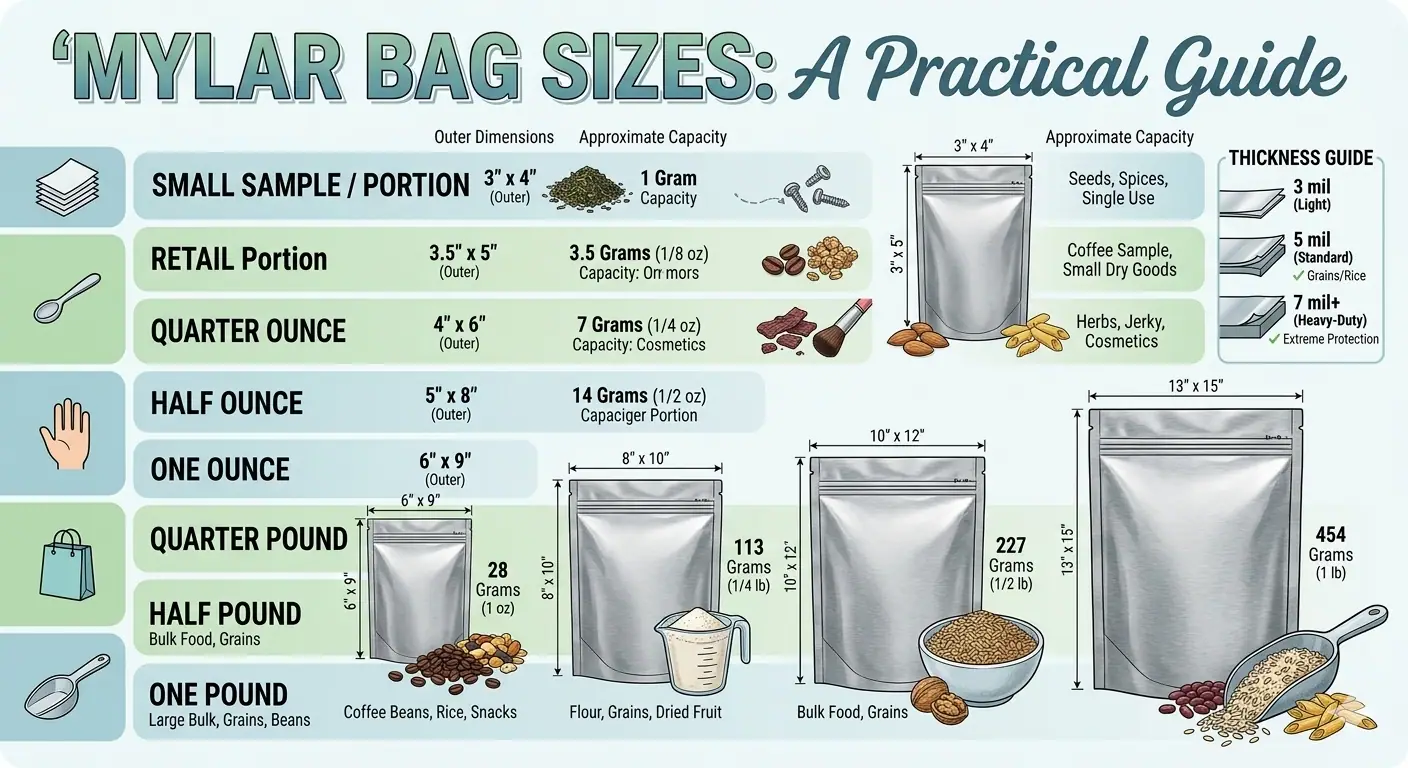
Mylar Bag Thickness: The Number That Really Matters
If there’s one spec that people overlook when buying mylar bags, it’s thickness. Thickness is measured in mils (1 mil = 1/1000th of an inch), and it has a big impact on durability, puncture resistance, and overall performance.
Here’s how to think about it:
- 5 mil — Lightweight and flexible. Fine for short-term retail use or products that won’t be handled roughly. Common for snacks, coffee and supplements. Not ideal for long-term storage where puncture resistance matters.
- 5 to 5.75 mil — The sweet spot for most food storage applications. Offers a solid balance between flexibility and durability. A good choice for anything you want to store for a year or more.
- 7 mil — Noticeably thicker and more rigid. Great for products that will be stacked, shipped in bulk, or exposed to rough handling. Popular with preppers and bulk food storage.
- 10 mil and above — Heavy-duty. This thickness is for serious long-term storage (25+ years), industrial applications, and situations where maximum puncture resistance is a must.
- Bottom line: For home food storage, 5–7 mil is the most practical choice. For premium retail products, 3.5–5 mil looks and feels great. For emergency preparedness, go 7 mil or above.
Seal Types Explained: Zipper vs. Heat Seal vs. Vacuum Seal
How a mylar bag is closed has a huge impact on how long the contents stay fresh. Here’s an honest breakdown of your options.
Heat Sealing
Heat sealing uses a heat sealer or in a pinch, a hair straightener or clothes iron to melt the inner PE layers of the bag together, creating an airtight bond. When done correctly, a heat seal is extremely reliable and creates a tamper-evident closure that’s hard to fake.
This is the most effective sealing method for long-term storage. The downside is that once sealed, the bag can’t be resealed without cutting it open and using the heat sealer again.
Tools you can use: Impulse heat sealer (best), hair straightener, clothes iron.
Best for: Long-term food storage, bulk products, any application where shelf life is the top priority.
Zipper (Resealable) Closure
A zipper closure lets customers open and close the bag multiple times without any tools. It’s the most consumer-friendly option and is standard for retail mylar bags. The trade-off is that zippers don’t provide the same airtight seal as a heat-sealed closure, so they’re better for medium-term storage rather than decades-long preservation.
Best for: Retail products, coffee, snacks, pet treats, cannabis, anything customers will reopen regularly.
Vacuum Sealing
Vacuum sealing removes the air from inside the bag before sealing, which dramatically reduces the oxygen level and extends shelf life. It requires a vacuum sealer machine. This method is highly effective for both short-term refrigerated storage and longer-term storage of foods that don’t do well with oxygen absorbers (like whole grains with higher oil content).
Best for: Meats, cheeses, grains, any product where removing as much oxygen as possible matters.
How to Use Mylar Bags for Food Storage: Step by Step
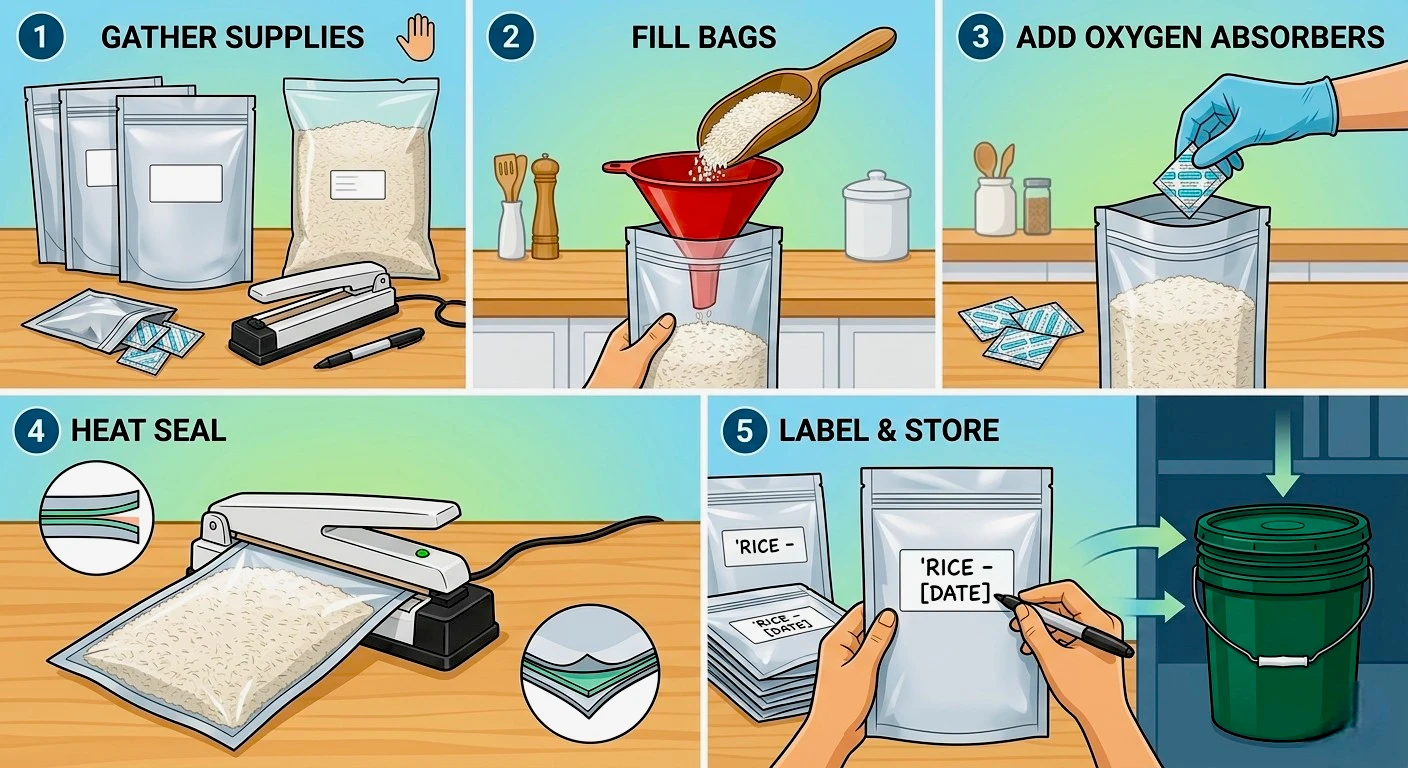
If you’re storing food at home, here’s the process that works best.
- Step 1 — Get your supplies together. You’ll need your Mylar bags, a heat sealer (an impulse sealer is ideal, but a hair straightener on the highest setting works too), oxygen absorbers appropriate for your bag size, a permanent marker for labeling, and your dry food items.
- Step 2 — Label first. Before you fill anything, write the contents, date, and weight on the outside of the bag. This is much easier to do before filling than after. Use a permanent marker — ballpoint pens can scratch through.
- Step 3 — Check your food is truly dry. This is critical. Moisture is the enemy of long-term storage. Your food should have 10% moisture content or less. Wet or high-fat foods like peanut butter, cooking oils, or anything with significant water content should not be heat-sealed in Mylar bags for long-term storage.
- Step 4 — Fill the bag, but not all the way. Pour your dry goods into the bag, leaving 2–3 inches of headspace at the top. Gently tap the bag on the table to settle the contents and reduce air pockets.
- Step 5 — Add oxygen absorbers. Drop your oxygen absorbers into the bag right on top of the food. Work quickly once the absorbers are out of their packaging they start absorbing oxygen immediately. A general guideline: 100cc per quart-sized bag, 300cc per 1-gallon bag, and 2,000cc for a 5-gallon bag.
- Step 6 — Seal the bag. Run your heat sealer across the opening, applying firm, even pressure. For extra security, do a double seal run the sealer across the bag twice, leaving about a quarter inch between the two seal lines?
- Step 7 — Test your seal. Squeeze the bag firmly. If you feel or hear any air escaping, reseal that section. A properly sealed bag with oxygen absorbers should feel firm almost like a brick within 24 hours as the absorbers pull the remaining oxygen out.
- Step 8 — Store properly. Mylar bags do their best work when stored in a cool, dark, dry location. Ideal storage temperature is below 70°F. A basement, pantry, or interior closet works well. For maximum shelf life on grains and legumes, store inside food-grade buckets with lids for added physical protection.
Best Foods for Long-Term Mylar Bag Storage
Not everything is well-suited for mylar bag storage. Here’s a quick reference on what works well and how long you can realistically expect things to last when properly sealed with oxygen absorbers.
Food Item | Expected Shelf Life |
| White rice | 25–30 years |
| Pasta (dried) | 25–30 years |
| Salt and pure sugar | Indefinite |
| Hard red wheat (whole berries) | 25–30 years |
| Dry beans and lentils | 8–10 years |
| Rolled oats | 20–30 years |
| Dried vegetables | 8–10 years |
| Freeze-dried fruits | 20–25 years |
| Cocoa powder | 10–20 years |
| Tea (dried) | 20–30 years |
| Whole dried herbs | 5–10 years |
| Dehydrated meat | 1–3 years |
| Roasted whole coffee beans | 1–2 years (quality degrades faster than safety) |
| Brown rice | 1–2 years (high oil content limits shelf life) |
| Powdered milk | 5–10 years |
What NOT to store in heat-sealed Mylar bags: Brown sugar (it gets rock hard), whole roasted nuts in large quantities (high oil content), anything with significant moisture, products with sharp edges that could puncture the bag, and reactive chemicals.
Mylar Bags vs. Other Storage Options
How does Mylar stack up against the alternatives? Here’s an honest comparison.
Mylar Bags vs. Regular Plastic Bags
Regular plastic bags (including standard zip-lock bags) have far higher oxygen and moisture transmission rates than Mylar. They’re fine for short-term storage a week in the fridge, a few months in the pantry but they offer virtually no protection over years. They’re also transparent, letting in light that degrades product quality.
Mylar Bags vs. Vacuum Sealer Bags
Vacuum sealer bags remove air effectively and extend fridge and freezer life significantly. But standard vacuum sealer bags are usually made from thinner, less robust materials without the aluminum barrier layer of Mylar bags. They also allow more light transmission. For short-term food preservation and freezer storage, vacuum sealer bags are excellent. For multi-year dry storage, Mylar wins.
Mylar Bags vs. Glass Jars
Glass jars with good lids (especially Mason-type jars with two-piece lids) are excellent for food storage and are completely inert nothing leaches into the food. Their downsides are weight, fragility, and the fact that most are transparent (light exposure). For small-batch storage where you want to see contents and reuse containers, glass is great. For bulk long-term storage or shipping, Mylar is more practical.
Mylar Bags vs. Food-Grade Buckets
Five-gallon food-grade buckets with gamma seal lids are a common choice for bulk dry goods. They’re durable and stack well, but they don’t provide the same oxygen barrier as mylar. Many serious preppers use both Mylar bags sealed inside food-grade buckets, combining the barrier properties of Mylar with the physical protection of hard plastic.
Who Uses Mylar Bags? (More Industries Than You’d Think)
- Home Food Preservers and Preppers This is probably the largest group of Mylar bag users in the US. Anyone building an emergency food supply, storing garden harvests, or simply buying in bulk to save money can benefit from Mylar bags for long-term storage.
- Small Food Businesses Cottage bakers, spice blenders, granola makers, and specialty food producers use custom-printed Mylar bags to package their products for retail. The combination of good barrier protection and beautiful custom printing helps products stand out on store shelves.
- Coffee Roasters Specialty coffee is one of the biggest categories for stand-up Mylar pouches. The one-way valve that allows off-gassing while keeping oxygen out was practically invented for coffee packaging.
- Cannabis Brands In states where cannabis is legal, mylar bags especially child-resistant varieties — have become the industry standard for flower, edibles and concentrate packaging.
- E-Commerce Sellers Anyone shipping perishable or semi-perishable goods through the mail has an interest in packaging that protects products during transit. Mylar bags are lightweight, flexible and tough enough to handle the rigors of shipping.
- Supplement and Nutraceutical Brands Protein powders, pre-workout supplements, vitamins, and herbal products are commonly sold in mylar pouches because the barrier properties help maintain potency through the product’s shelf life.
Buying Guide: What to Look for Before You Order
Here’s a practical checklist for shopping for mylar bags if you’re buying for home use or for your business.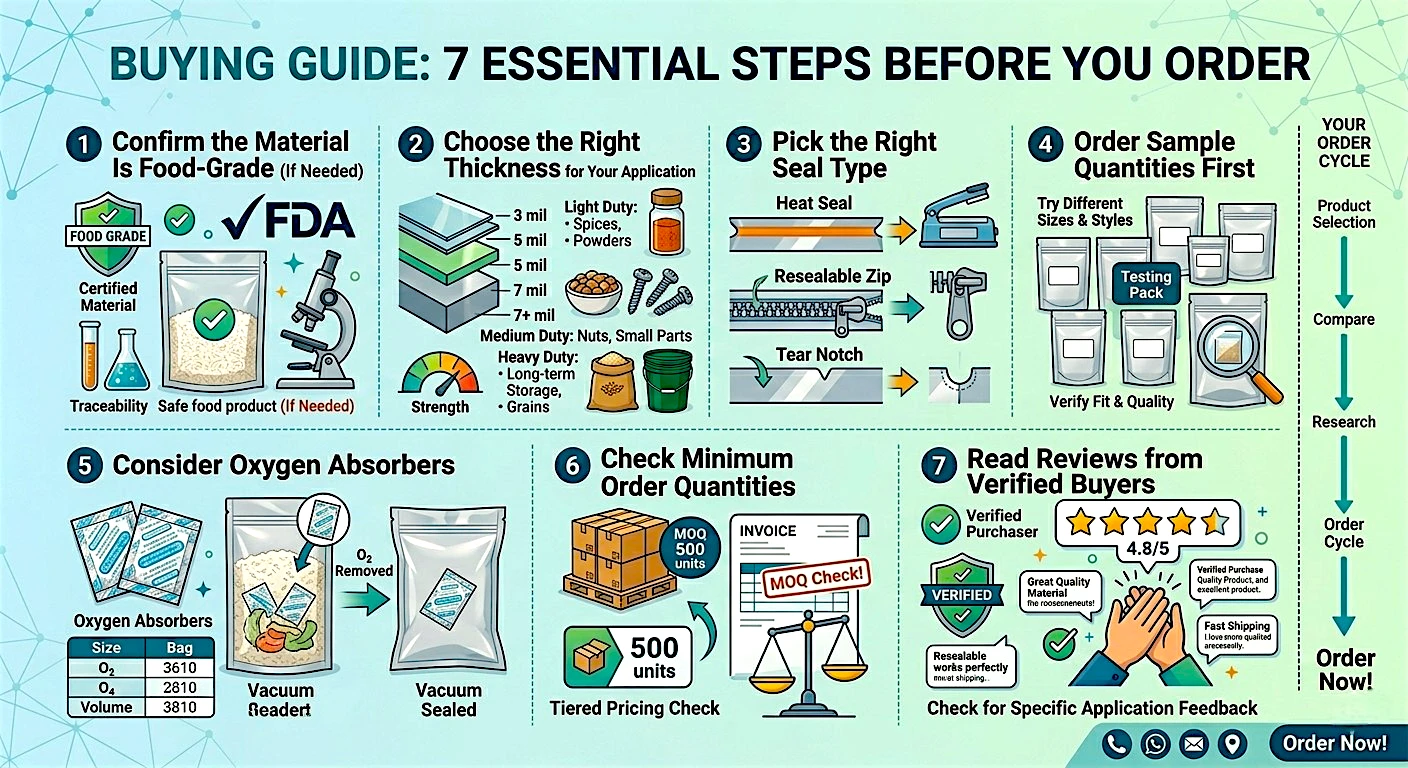
1. Confirm the Material Is Food-Grade (If Needed)
If your mylar bags will hold food or supplements, make sure the supplier confirms the bags are food-grade and, ideally, FDA-compliant. This means the inner PE layer is made from materials that are safe for direct food contact. Don’t assume ask for documentation.
2. Choose the Right Thickness for Your Application
- Short-term retail packaging: 3.5–4 mil
- General food storage (1–5 years): 5–5.75 mil
- Long-term emergency storage: 7–10 mil
- Industrial or heavy-duty: 10 mil+
3. Pick the Right Seal Type
If you need long-term storage with the absolute best freshness preservation, go with heat-seal bags. If your product is retail-facing and customers need to reseal the bag, choose a stand-up pouch with a zipper. If you need both, some bags offer both a zipper and a heat-seal option.
4. Order Sample Quantities First
Before committing to a large order of custom-printed bags, order samples. Check the print quality, the sealing performance, the material feel, and whether the bag stands up properly on a shelf if you need a stand-up pouch.
5. Consider Oxygen Absorbers
If you’re buying mylar bags for long-term food storage, you’ll need oxygen absorbers to go with them. Make sure you’re buying the right size absorber for your bag capacity, and that they’re fresh (absorbers have a limited shelf life once opened).
6. Check Minimum Order Quantities
For custom-printed bags, most suppliers have minimum order quantities (MOQs). Make sure the MOQ fits your business volume ordering 10,000 bags when you only need 500 ties up cash and storage space unnecessarily.
7. Read Reviews from Verified Buyers
Check for reviews that specifically mention seal quality, material thickness consistency, and whether the bags matched what was advertised. These practical details matter more than marketing claims.
Sum Up All
At Shop Mylar Bags, we carry a full range of mylar bags for every application from plain heat-seal bags for bulk food storage to custom-printed stand-up pouches for retail brands. If you have questions about which bag is right for you, our team is happy to help you figure it out.
Shop Mylar Bags — Quality Packaging for Food, Cannabis, Business, and Home Use